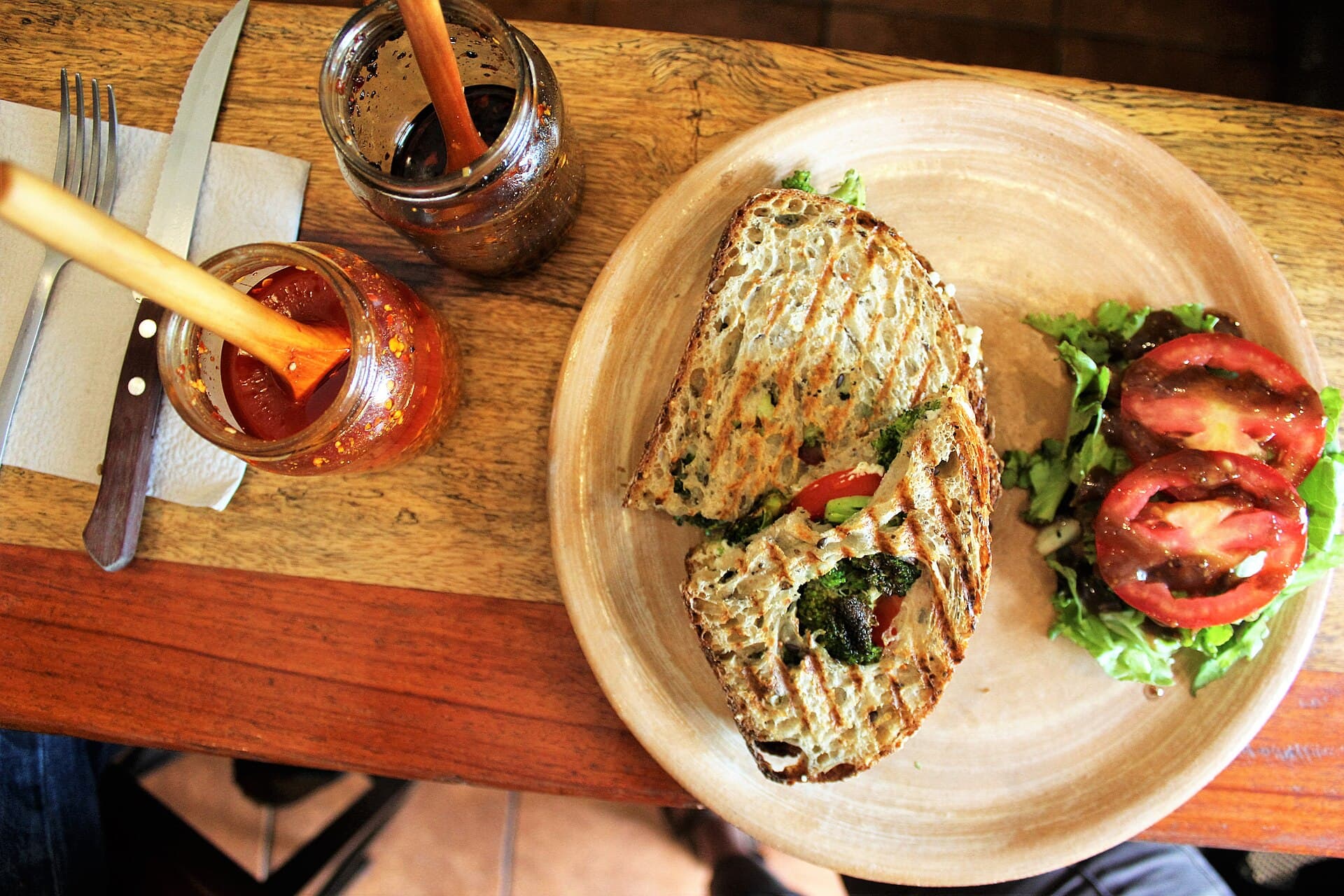
Photograph: charlieontravel / Wikimedia Commons · CC BY 2.0. See image credits.

Afternoon crashes, lunch timing and the 3pm slump
The slump is not always a character defect. It is often lunch, light, heat and a meeting that should have been a walk.
Tom Reilly · 28 April 2026 · 5 min read
The 3pm slump is so common in Australian offices that it feels like part of the employment contract: eyes on the inbox, brain in a car park, hand reaching for something sweet while the air-conditioner hums and the sun still has hours to run. We blame laziness, blood sugar mythology, or the need for another coffee. Sometimes those guesses are right. Often the slump is lunch eaten badly, sleep borrowed from last night, light that never reached your eyes, and a meeting that should have been a ten-minute walk.
This essay sits in the food hub and talks to sleep without pretending food is the only lever. It is practical, not punitive—no crash diets, no invented trials, no supplement funnels.
What the slump feels like—and what it is not
The afternoon crash is usually a dip in alertness, not sudden unconsciousness. Typing slows. You reread the same line. You stand for tea mostly to move. Hunger may or may not appear; craving often does.
It is not the same as narcolepsy, severe hypoglycaemia in treated diabetes, or depression—though depression can flatten afternoons too. If sleep attacks happen daily regardless of meals, or if you wake unrefreshed every morning with snoring, see a GP. Food fixes cheap problems first; it does not treat sleep apnoea.
For most desk workers, the slump is a mixture: post-meal physiology, circadian rhythm, mild dehydration, and environment. Fix the cheapest variable before you buy a powder.
The slump is often lunch, light, heat, and a chair— not a character defect.
Lunch timing: too early, too late, too rushed
Skip lunch and 4pm owns you. Eat lunch at 11am because breakfast was nil and by 2pm you are hollow again. Eat at 2pm because meetings ran long and digestion collides with the circadian dip. Timing is underrated.
Useful patterns:
- Anchor lunch roughly midway through your waking day—often between noon and 1.30pm for a 7am riser—not as law, as a default you return to after chaos days.
- Protect twenty minutes to eat sitting down. A sandwich inhaled in a car is still food; it is not always useful food. Chewing and calm matter for how sharply you return; see Absorption over appetite for that thread.
- Front-load protein and fibre when afternoons matter: chicken and salad roll, leftover stir-fry, tin of tuna on crackers with tomato—not a moral list, a stability list.
Skipping lunch to “stay sharp” usually mortgages the afternoon for a bright noon. Executives and nurses both learn this; one eats at the desk pretending productivity, the other steals five minutes in the sun and returns clearer.
What lunch does to blood sugar—and what it does not
Australian lunch culture swings from nothing to a pub parmi the size of a hubcap. Ultra-processed white bread with sweet chutney and chips sends many people on a faster rise-and-fall than grainy bread, beans, and olive oil—but individual responses vary. Continuous glucose monitors on healthy volunteers show wide spread; your colleague’s perfect lunch may be your fog.
Rules of thumb without turning lunch into maths:
- Pair carbs with protein, fat, or fibre so the climb is gentler.
- Watch liquid sugar—large soft drink, juice, fancy iced coffee—as part of lunch, not an aside.
- Notice repeats: if the same shop order always precedes slump, change one element before you blame your willpower.
Blood sugar is not the whole story. Volume matters—a heavy hot meal shunts blood toward the gut. Salt and fat slow gastric emptying; you feel satisfied but sedated. Spice wakes some people and upsets others. Experiment like an adult, not a defendant.
Heat, hydration, and the Australian office
Capital city summers turn glass towers into greenhouses. After lunch, core temperature nudges up from digestion; ambient heat adds another layer. Mild dehydration—common when morning coffee exceeded water—thickens blood slightly and dulls concentration.
Cheap fixes:
- Water with lunch, not only coffee after.
- Five minutes outside in natural light—stairs, footpath, carpark fringe. Heat is real; so is stagnant air. Movement plus light beats another biscuit for many slumps.
The water hub connects hydration to broader vitality; afternoons are where neglect shows up.
Light, circadian rhythm, and the post-lunch dip
Human alertness naturally dips in the early afternoon—a circadian feature, not a bug. It deepens when morning light was thin: winter commute in the dark, home office with curtains drawn, back-to-back video calls from 8am.
Offices that ignore light produce slumps that food alone cannot fix. Read Workplace energy, light and meetings for the full workplace map. Food essay, short version: a dim cave after a heavy lunch is two sedatives stacked.
Try outdoor light before the dip when possible—lunch walk facing daylight without sunglasses for part of it. Ten minutes is not fitness training; it is clock-setting.
Sleep debt arrives at 3pm
Last night’s short sleep—child awake, FIFO roster, Netflix, worry—does not always hurt at breakfast. Coffee masks morning; afternoon reveals the bill. A reasonable lunch on five hours’ sleep still feels like wading through honey.
Connect food choices to tiredness carefully. Drinking when you are already tired explains why alcohol at lunch on sleep debt is a double tax. A third espresso after 2pm may steal sleep tonight and deepen tomorrow’s slump.
The cheapest fix for recurring 3pm fog is often earlier, cooler, longer sleep, not a smarter snack—though both can coexist.
Meetings, movement, and the sugar reach
Back-to-back video calls freeze the body. Glucose from lunch circulates; muscles barely use it; brain feels slow. The hand reaches for sugar because sugar promises fast activation—it delivers, then drops.
Before the reach:
- Stand for one call if culture allows.
- Walk to deliver a message instead of pinging.
- Eat fruit with yoghurt or nuts if hunger is real—not biscuits alone.
Movement for five minutes after eating also aids gastric emptying for some people and breaks postural stupor. Not a marathon—a lap of the block, stairs, stretch by an open window.
When to see a GP or dietitian
Most slumps respond to lunch, light, water, and sleep tweaks over a fortnight. Book help when:
- Extreme fatigue persists despite adequate sleep and balanced meals.
- Diabetes or prediabetes is diagnosed and afternoon lows or highs are frequent—medication and meal timing need professional tuning, not blog guesses.
- Unintended weight change, bowel changes, or thirst with urination cluster with afternoon crashes.
Accredited practising dietitians work with real Australian pantries; GPs screen for thyroid, anaemia, and sleep disorders. This journal points; it does not prescribe.
A fortnight experiment
Pick two weeks without buying new supplements. Hold wake time loosely steady. Eat lunch you could repeat—protein, fibre, water, chair. Walk ten minutes in daylight four days a week. Dim afternoon caffeine if sleep suffers. Note 3pm on a scrap of paper: fog, fine, or fierce.
If most days move from fog to fine, you learned something cheap. If nothing shifts, sleep and clinical review matter more than another sandwich theory.
The 3pm slump is not always lunch—but lunch is often where Australians still have margin. Eat enough, move briefly, let light in, protect tonight’s sleep. The inbox will still be there. You might read it clearly enough to finish before knock-off.
Questions readers send the desk
- Is the 3pm slump just lunch?
- Lunch, sleep debt, heat and a dim office share the blame. Fix the cheapest one first.
- Should I skip lunch to stay sharp?
- Skipping lunch usually mortgages 4pm. Eat enough, then move for five minutes.