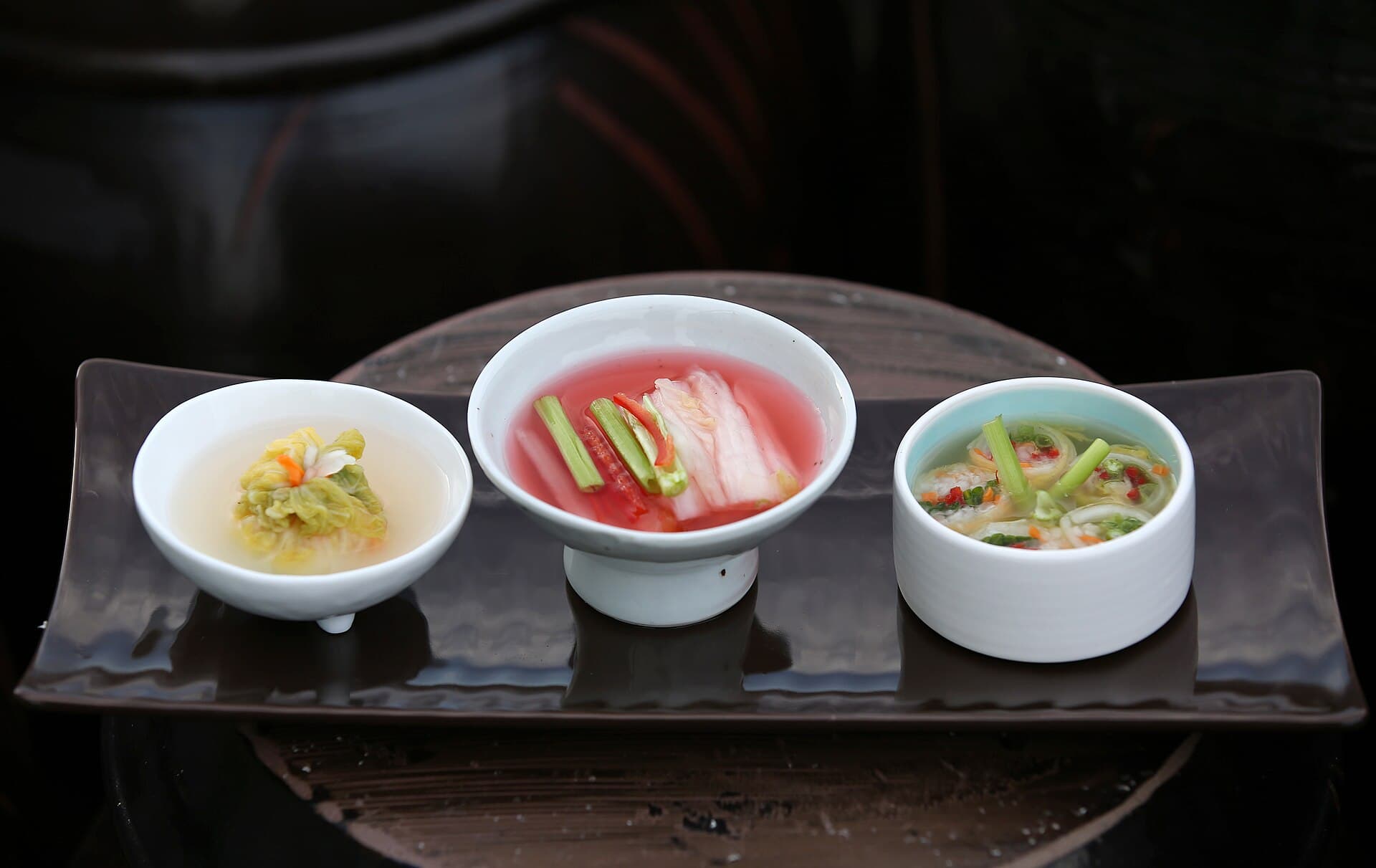
Photograph: korea.net / Wikimedia Commons · CC BY-SA 2.0. See image credits.

The Australian gut, fibre and what a probiotic can and cannot do
Sauerkraut at the Saturday market is not a personality. Fibre, fermented food and the long, unfashionable work of a working gut.
Priya Nadesan · 25 March 2026 · 6 min read
Walk through a Saturday farmers’ market in any capital city and you will meet sauerkraut with a backstory, kombucha brewed in someone’s garage, and a stallholder who speaks about gut health with the certainty once reserved for footy tips. Some of that ferment is delicious. Some of it is performance. The Australian gut—the ordinary one behind school runs and FIFO swings—does not need a new identity every season. It needs fibre, regular meals, sleep, and occasionally a clinician who listens.
This essay sits in the food hub beside Absorption over appetite. It explains what probiotics can and cannot do, why fibre remains unfashionably important, and how to tell market enthusiasm from medical red flags. Our editorial standards spell out why we do not invent trials or funnel readers to supplement brands.
The gut as infrastructure, not a mood board
Your intestines are not a decorative “second brain” for Instagram quotes. They are metres of tissue moving food, absorbing water and nutrients, hosting trillions of microbes, and signalling fullness and discomfort back to the brain. When the system works, you notice little. When it misbehaves—bloating, urgency, constipation, pain—you notice everything.
The microbiome is real science; the microbiome merchandise is optional. Bacterial communities shift with diet, antibiotics, illness, and time. They do not rewrite themselves overnight because you ate kimchi once. Lasting change, when it comes, tends to look like years of varied plant foods, not a fortnight of capsules after Christmas excess.
A working gut is boring in the best way: regular bowel habits, tolerable wind, meals that do not require a post-mortem.
Australian diets often under-deliver on fibre. We eat plenty of meat, white bread, and snack foods engineered to melt on the tongue. Vegetables appear, but sometimes as a garnish beside a pub schnitzel. Fibre—soluble and insoluble, from plants—feeds not only you but the bacteria that ferment it into short-chain fatty acids useful for colon health. That is the long game probiotics pretend to shortcut.
Fibre first: the unglamorous lever
Dietary guidelines in Australia recommend adults eat enough fibre daily; many of us do not, especially if we skip legumes, whole grains, nuts, and vegetables. Fibre is not one thing. Insoluble fibre adds bulk and speeds transit—think wheat bran, many vegetables, seeds. Soluble fibre dissolves into gels that slow digestion and feed bacteria—think oats, barley, apples, lentils.
Practical additions that fit Australian kitchens without turning you into a monk:
- Half a cup of lentils or beans in soup, bolognese, or a salad—not a separate “health meal”.
- Mixed frozen vegetables in the freezer; they count, and they survive a heatwave when the crisper wilts.
- Nuts on porridge instead of honey alone; texture matters for satisfaction.
- Wholegrain bread when it tastes good to you; if it does not, rye crackers or oats elsewhere in the day.
Increase fibre gradually and drink water with it. A sudden jump from low fibre to a bucket of kale can inflate wind and discourage the very habit you need. The gut adapts over weeks, not hours.
For older readers juggling appetite and teeth, fibre still matters but texture may need softening—see Eating for energy after sixty. Absorption and comfort share the same plate.
Fermented food: food, not halo
Fermentation predates probiotic marketing. Yoghurt, kefir, miso, tempeh, sauerkraut, kimchi—they preserve food and add tang. Some carry live bacteria; heat and processing kill cultures in others. Plain yoghurt with live cultures is a everyday ferment. A dessert yoghurt with syrup and a probiotic label is still dessert.
Supermarket rules of thumb:
- Read the label for live cultures on plain products, not cartoon health claims alone.
- Check sugar on flavoured pots; bacteria do not cancel sugar’s metabolic load.
- Treat supplement-style drinks as optional spend, not foundation.
Home ferments can be wonderful and safe when prepared cleanly; they can also grow the wrong organisms when jars are sloppy. Market small-batch kraut is not automatically safer than a reputable commercial product—it is simply smaller batch.
Ferments belong beside meals, not instead of them. A spoon of kimchi with rice and vegetables beats kimchi alone as a “gut reset”.
What probiotic supplements can and cannot do
Probiotic supplements contain specific strains at specific doses, sometimes studied for particular conditions—antibiotic-associated diarrhoea, some irritable bowel presentations, pouchitis in specialist care. Those stories belong in peer-reviewed medicine and on a prescriber’s or pharmacist’s radar, not in a journal essay pretending one strain fixes every Australian tummy.
What they cannot honestly do for the general public:
- Replace fibre, sleep, or balanced meals.
- Permanently “reseed” a microbiome after a single course—evidence for lasting colonisation from most OTC products is weak.
- Diagnose or treat coeliac disease, inflammatory bowel disease, cancer, or bleeding.
What they might do, for selected people with professional advice: reduce symptom burden in defined scenarios, support recovery alongside treatment—not instead of it.
If you are healthy, spend money on beans before bottles. If you are unwell, spend time with a GP who can refer to a dietitian accredited with Dietitians Australia—not a influencer with a discount code.
Bloating, wind, and the GP line
Bloating is common and usually benign: too much fizzy drink, eating fast, FODMAP-heavy foods on an empty stomach, premenstrual fluid, anxiety. Wind increases when fibre rises or when sugar alcohols in “ keto” bars reach the colon untouched.
See a GP when:
- Blood in stool or on the paper, repeatedly.
- Unexplained weight loss or loss of appetite.
- Wakeful symptoms—pain or diarrhoea that rouses you from sleep.
- A sudden change in bowel habit lasting more than a few weeks without an obvious cause.
- Family history of bowel cancer or inflammatory bowel disease with new symptoms.
Night symptoms especially matter; functional bloating often eases overnight, while some serious conditions do not. Our FAQ above is blunt for a reason: a new kraut jar is not the right response to blood.
Antibiotics, travel, and recovery
Antibiotics save lives and disturb gut communities as collateral. Short courses for dental or skin infections sometimes cause loose stools; serious colitis from Clostridioides difficile is a medical emergency, not a probiotic moment. If diarrhoea during or after antibiotics is severe, persistent, or accompanied by fever, call a doctor.
Traveller’s diarrhoea resolves for most people with hydration and time. Prophylactic supplements before Bali are a personal cost-benefit conversation with a travel clinic, not a moral requirement.
Recovery after gut upset is usually simple food: rice, toast, bananas, yoghurt if tolerated, water or oral rehydration when fluid loss is high. Reintroduce fibre slowly as symptoms settle.
Culture, cost, and class
Farmers’ markets and artisan ferments skew affluent. Food bank queues and remote store prices tell another Australian gut story—fresh produce scarce, ultra-processed foods cheap and stable. “Eat more kimchi” lands differently when cabbage is three suburbs away and shift work eats the kitchen hour.
This journal does not pretend one sauerkraut stall fixes structural inequality. It does insist that fibre from affordable staples—canned beans, oats, frozen peas, brown rice when on special—is the same biology as boutique ferments. Dignity in food advice means meeting people where they shop, not where influencers brunch.
Slow work, no personality required
The Australian gut thrives on repetition, not rebranding. Fibre daily, ferments if you like them, water with meals, sleep that lets the migrating motor complex sweep the small intestine at night—yes, sleep belongs here too.
Probiotics have a place in modern medicine’s toolbox, narrowly applied. They are not the personality of your pantry. Sauerkraut at the market can be lovely; it can also stay in the jar while you quietly add lentils to the mince.
That is the long, unfashionable work: less halo, more habit. Your Saturday self does not need a gut-themed tote bag. Your Monday self needs a regular bowel habit and a plate that feeds the bacteria already home.
Questions readers send the desk
- Are supermarket yoghurts useful?
- Plain yoghurt with live cultures is food. A dessert pot with a probiotic halo is still a dessert pot.
- When is bloating a GP issue?
- Blood, unexplained weight loss, night symptoms or a sudden change in bowel habit belong with a doctor, not a new kraut jar.