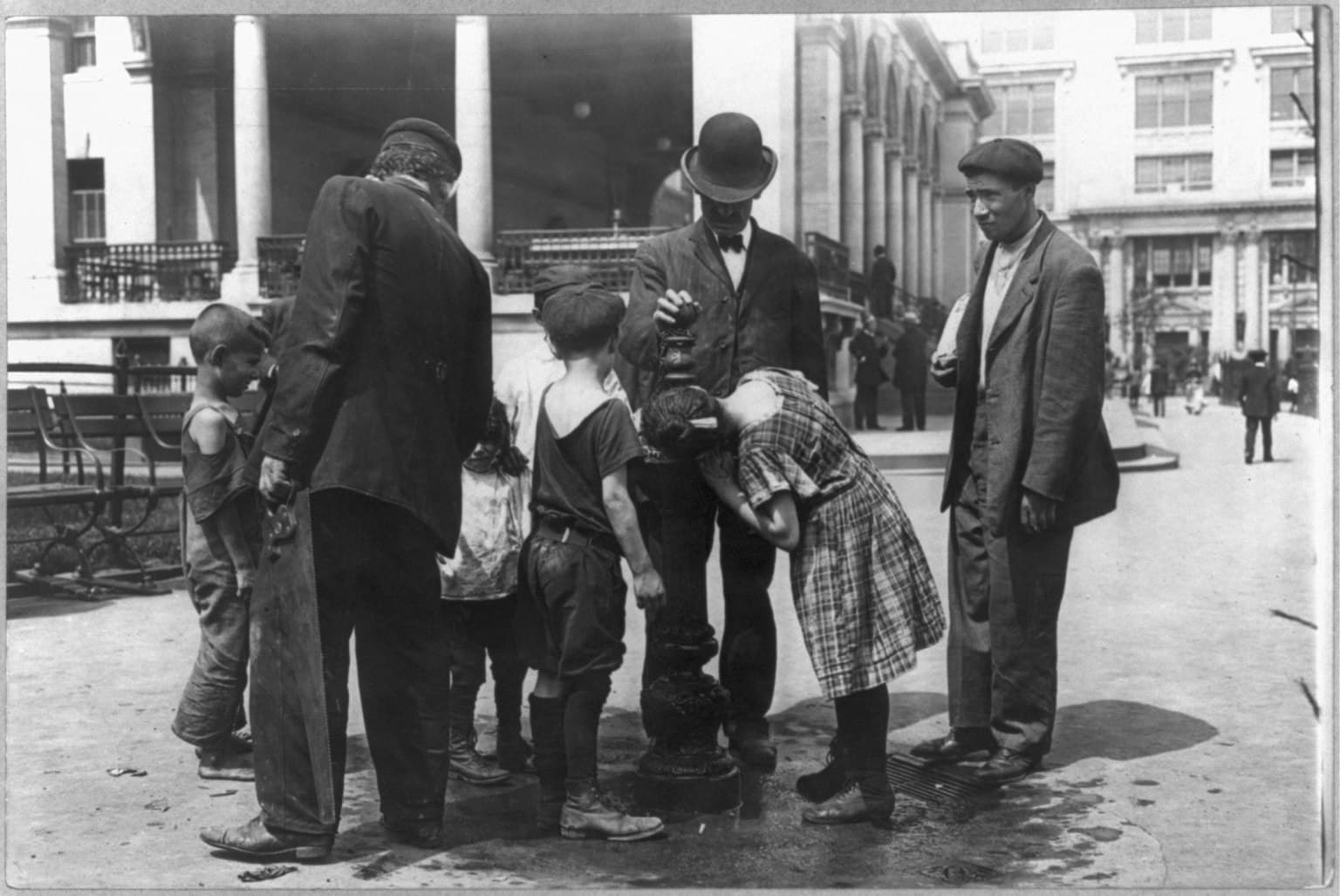
Photograph: George Grantham Bain Collection / Wikimedia Commons · Public Domain. See image credits.

Electrolytes, heatwaves and drinking like the weather is trying to flatten you
A January afternoon in the inland is not a wellness spa. Sweat, salt, shade and the difference between a sports drink and a glass of water.
Priya Nadesan · 22 January 2026 · 5 min read
A January afternoon in Bourke does not care about your step count. The air shimmers, the bitumen softens, and sweat leaves faster than you notice if you are laying bricks or chasing children across a park with no shade. Hydration in Australian summer is not a lifestyle aesthetic; it is thermodynamics with a human face. Water carries heat out through evaporation; blood volume drops when you under-replace fluid; salt leaves with sweat even when you do not see it on a dark shirt.
This essay sits in the water hub next to Bedroom heat, humidity and the tropical sleep problem—because hot nights and hot days share one body—and touches food because meals carry salt and potassium more reliably than a tub of flavoured powder. Office life under fluorescent lights has its own dehydration story; see Workplace energy, light and meetings for the air-conditioned version of the same Tuesday.
Sweat is not just water
Perspiration is mostly water, but it is not pure H₂O. Sodium dominates the loss for most people; smaller amounts of potassium, magnesium, and chloride matter over long shifts. Replace only water for hours on a roof and you can dilute sodium in the blood—a rare but real clinical emergency at the extreme end. At the more common end, you feel foggy, crampy, or oddly irritable because you are flat, hot, and under-fed on salt and fluid.
That is where electrolytes enter public conversation. The word sounds medical; the supermarket aisle looks like sport. Useful distinction:
- Ordinary summer day, moderate activity, meals on schedule: water plus food usually covers you.
- Long outdoor labour, double training sessions, vomiting illness, or heavy alcohol the night before: you may need deliberate salt and fluid together—not neon sugar water by default, but attention.
- True heat stroke or collapse: emergency care, not a sachet mixed in the car park.
We are not writing prescriptions. If you are on medications that affect sodium or kidney function, your clinician owns the numbers. This page is for the tradie, the gardener, the festival medic tent volunteer, and the parent who wants plain language before buying a kilo of powder online.
Heatwaves as a public rhythm
Australia names heatwaves like other countries name storms. Bureau of Meteorology forecasts combine temperature, humidity, and overnight minima—because a 32-degree night in Melbourne after a 44-degree day is a different beast from a dry 38 in Alice where the air still cools after sunset.
Household habits that actually help:
- Drink before thirst on known brutal days; schedule refills like tool checks.
- Shade and timing—mow early, pour concrete early, accept that midday is indoor work if you have that luxury.
- Cool storage—water left in a hot car tastes awful and discourages drinking; rotate bottles.
- Check on elders and isolated neighbours—hydration failure in heat is a community risk, not a personal wellness fail.
Public fountains, service station taps, and workplace bubblers are infrastructure. Use them without embarrassment. The historical photo on this page—children at a street fountain— is a reminder that cities once built heat into civic design. Modern life hides water behind disposable bottles; the physics did not change.
A sports drink is sometimes food and sometimes theatre. Know which day you are having.
Sports drinks, sachets, and the sugar question
Commercial sports drinks combine water, sugar, and electrolytes for a reason: flavour drives intake on the field, and glucose fuels long exercise. They are not mandatory for a twenty-minute walk. Electrolyte sachets and tablets vary widely—some mostly sodium, some magnesium marketing for cramps the evidence does not always support as a magic fix.
Read labels like food:
- Sugar content—appropriate for a marathon, excessive for desk sipping.
- Sodium per serve—meaningful for heavy sweaters; pointless if you already eat salty takeaway and barely move.
- “Natural” claims—still chemistry.
DIY options exist—water, pinch of salt, squeeze of citrus, maybe a splash of juice—for people who tolerate taste experiments. They are not sterile pharmacy compounding; they are kitchen maths for a hot week on the farm. If vomiting persists or urine stops, that is clinician territory, not a tweak to the pinch.
Office air and the invisible sweat
You can dehydrate in a chilled tower. Air-conditioning dries air; you lose moisture through skin and breath without the social cue of a soaked shirt. Meetings stack; the bottle stays full; headache arrives at 3pm beside the screen glare discussed in Workplace energy, light and meetings.
Fixes are boring: bottle on the desk you actually use, refilled when you stand for lunch, herbal tea if plain water bores you, fewer consecutive hours without a sip. Caffeine counts as fluid for most healthy adults; it is not a licence to skip water all day, and late coffee still belongs in the sleep conversation tied to Bedroom heat, humidity and tropical sleep.
Children, sport, and Saturday in the sun
Junior sport on expanse of oval without shade is an Australian ritual and a hydration exam. Kids heat up faster; they forget to drink when competing; coaches focus on tactics. Parents can:
- Send full bottles, not one sip left from last week.
- Offer fruit at breaks—water plus potassium in a package kids accept.
- Teach urine colour without shame—pale straw is fine; apple juice colour is a nudge.
- Resist energy drinks—caffeine and sugar storms are not junior hydration.
Heat policy at clubs varies; advocacy for shade and later kick-offs is part of vitality in a warming climate—not paranoia, just adaptation.
Alcohol, hangover, and the day after
Beer on a hot afternoon is a double fluid trick: alcohol suppresses antidiuretic hormone, so you excrete more; the crowd sweats more; nobody remembers the water jug. The morning after is partly sleep debt, partly dehydration, partly poison processing. Electrolyte sachets may help if you also drink water and eat; they do not erase a binge. No journal essay fixes that; honesty might.
When to escalate beyond the water bottle
Dizziness, confusion, hot dry skin in someone who should be sweating, repeated vomiting, or collapse during exertion are not solved by another litre in the shade. Call emergency services, cool the person, follow operator instructions. Heat illness kills Australians most summers; humility before those symptoms is part of common-sense science.
Rural and regional response times are longer by geography—that is not an argument for heroics on the phone; it is an argument for prevention on the tools you control: earlier starts, shared shade, someone checking the crew, eskies that are not mostly ice and one warm bottle at the bottom.
Dry heat versus humid heat
Inland western towns often feel “dry” while you lose fluid fast through sweat that evaporates before you notice. Coastal humid heat slows evaporation; the shirt stays wet, heart rate climbs, and people swear they drank plenty because the bottle is empty. Both patterns need steady refills; humid days can feel less thirsty while still draining sodium on long effort. Night recovery links to Bedroom heat, humidity and the tropical sleep problem—sleep loss stacks on top of daytime fluid debt.
For everyday heat: water first, food second, electrolytes when the day earns them, shade always. Read Live Water as the hub anchor—material, bodily, unromantic—and let the weather be the boss it already is.
Questions readers send the desk
- Do I need electrolyte powder every summer day?
- Most days, water, food and shade are enough. Long outdoor work, vomiting, or a true heat emergency is a different letter.
- How much should I drink on a 40-degree day?
- Drink before you are parched, and watch urine colour and dizziness. There is no single litre target that fits a roof tiler and an office worker.