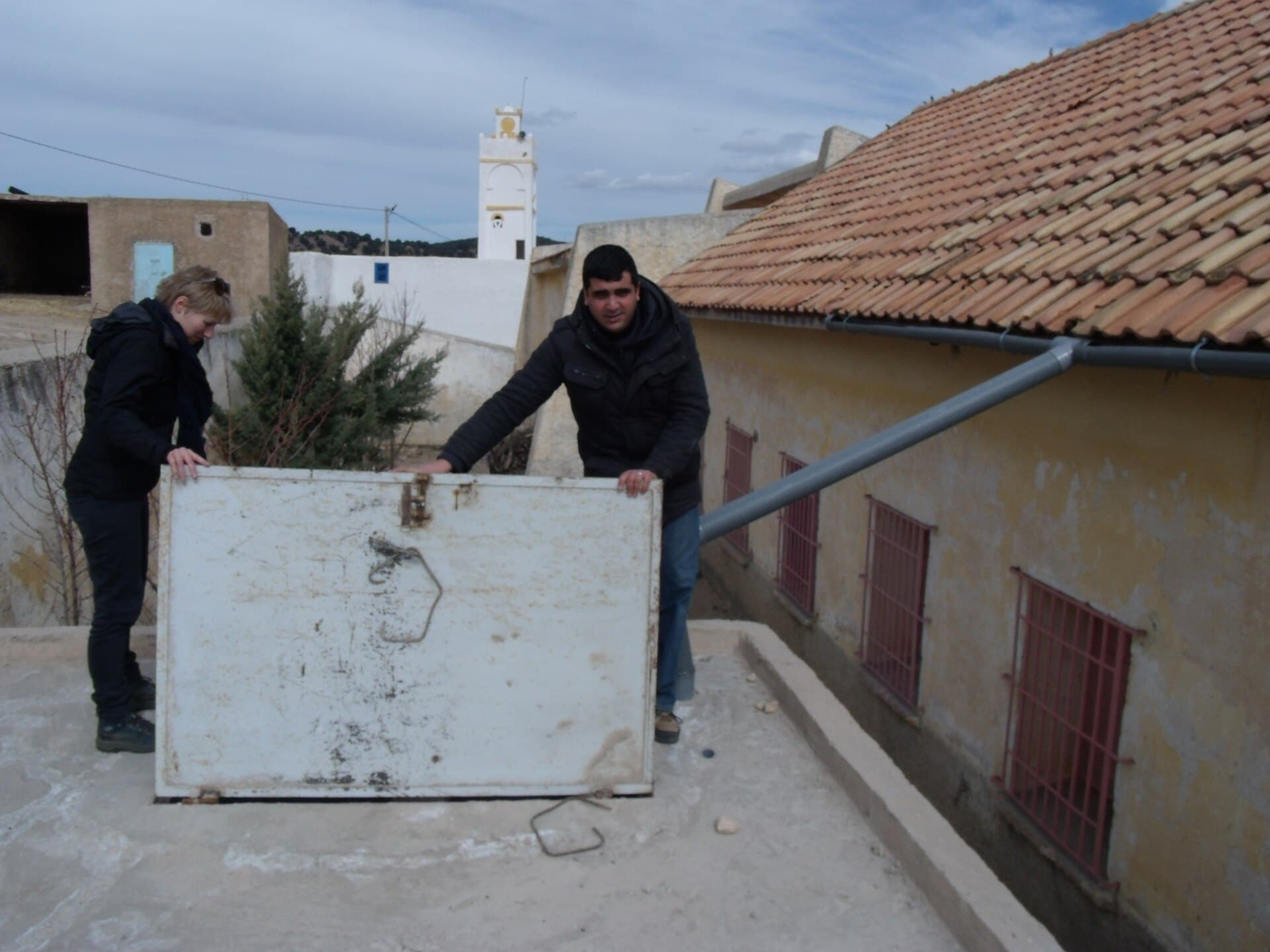
Photograph: SuSanA Secretariat / Wikimedia Commons · CC BY 2.0. See image credits.

Rainwater tanks, hard water and the household hydration problem
Rural tanks, limestone towns and a jug that tastes of the pipes. How Australian houses actually drink.
Tom Reilly · 11 March 2026 · 6 min read
The hydration conversation in Australia splits cleanly at the kitchen tap—and then splits again at the letterbox. In one house, Melbourne’s forest catchment arrives soft and almost sweet. Two hours inland, limestone country leaves scale in the kettle and a flat mineral note in a glass. On a dirt road outside Wagga, the only supply might be what fell on the roof last month, strained through gutter, first-flush diverter, and a tank that has not been inspected since the last dry spell. Same country; different water job.
This essay lives in the water hub beside What live water meant, and what Australian tap water actually is and How to read a water quality report without a chemistry degree. Vitality is not a bottle—it is whether the household actually drinks enough plain fluid through heat, work, and taste preferences. See vitality for how we tie those threads together without selling miracles.
Rainwater tanks: freedom and responsibility
For hundreds of thousands of Australian homes, tank water is primary or backup supply. The romance is real: independence from a main, soft rain that bypasses some of the chlorine taste people complain about in town. The labour is also real. Roofs collect dust, pollen, possum visits, and ash in fire season. Gutters overflow; first-flush devices fail silently; mosquito breeding in unmaintained inlets is both annoying and a health nuisance worth fixing.
A tank is a small water utility you own. That means:
- Roof and gutter hygiene before storms, not after the water already tastes wrong.
- First-flush or equivalent so the filthiest first minutes of rain do not enter storage.
- Screens and light exclusion where design allows—algae likes sunlight.
- Pump and filter maintenance if you pressurise to the house; sediment clogs cheap cartridges fast.
- Testing when something changes—new stock nearby, smoke, odd colour—not because a guru said so.
Tank water is not automatically “pure” because it fell from clouds. It is only as clean as the surface it touched. In many rural towns tank water is the only water; calling that a wellness aesthetic insults people doing serious maintenance with a ladder and a torch.
A first-flush diverter is not a spiritual practice. It is plumbing that keeps bird droppings out of your dinner water.
If you also connect to a mains backup, know how the switchover works and who is responsible for backflow prevention. That is council and plumber territory, not journal poetry—but your hydration depends on it when the tank runs low in February.
Hard water: geology in your cup
Hardness means dissolved calcium and magnesium—often from limestone aquifers and river paths through mineral soils. Adelaide, parts of Perth’s blend, and many inland centres know the scale on shower glass and the white fur inside electric kettles. Hard water is not, for most healthy adults, a medical emergency. It can make soap feel slimy, shorten appliance life, and make people refuse plain water because it tastes flat or metallic.
That refusal is the hydration problem we care about. If the household reaches for soft drink because the tap tastes like a coin, hardness has won behaviourally even if the chemistry is benign. Fixes are mundane:
- Chill the tap water; cold dulls some off-notes.
- Use a simple jug in the fridge if that is enough to increase intake.
- Targeted filtration for taste—carbon often helps chlorine and some organic notes; ion exchange or RO goes further at cost and waste.
- Descale the kettle so you are not drinking flakes of old mineral along with tea.
Do not confuse hardness with salinity. Some inland bores and river stretches trend salty; that is a quality report and possibly a desalination or alternative supply conversation, not a Brita mood board.
Town supply on the fringe: when “urban” still means tank
Peri-urban Australia blurs lines. You might pay rates to a shire, drink tank water, and truck in water when the dam level on the property drops. FIFO camps and remote stations run their own mini-systems. Hydration advice written for a Sydney office worker—“just use the bubbler”— misses the esky on the ute and the shared urn that tastes of chlorine and yesterday’s coffee.
In those settings, habit beats ideology. Refill bottles at known-good taps. Mark how much you brought for the shift. Teach kids on farms that afternoon headaches in muster season often overlap with too much sun and too little cup time—not because water cures heat stroke (it does not; shade and emergency care do), but because chronic under-drinking makes hard days harder.
The jug that tastes of the pipes
Older houses carry legacy plumbing: galvanised pipe, copper with a morning metallic spike, flexible hoses with their own odour stories after a product recall in the news. If water tastes wrong only from one tap, suspect the fixture. If it clears after a minute’s flush, stagnation in a dead leg may be the culprit—worth a plumber, especially if you are on immunocompromising treatment; that edge case belongs with your clinician, not a blogger.
New estates are not immune. Construction grit in lines, air in pipes, and over-chlorination after main breaks all happen. Utilities publish notices; read them.
Behaviour: when the problem is not the molecule
Some households hydrate fine on tank water with no filter. Others fail on pristine town supply because nobody sits down with a glass. Link this to What live water meant: the old Energy Field key was about material seriousness—water as something the body runs on—not about winning a purity contest.
Practical nudges that survive hard water and tank life:
- Anchor drinking to meals—fill glasses when you set the table.
- Keep one bottle in the car you actually drive, not the car that sits in the garage.
- Soup, fruit, and stew count as fluid; rural kitchens often hydrate through food more than city habit trackers admit.
- Tea and coffee are fluid; they are not an excuse to skip water all day, especially when caffeine runs into the afternoon sleep window.
Reading your situation without paranoia
If you want numbers, tank and bore owners order tests from accredited labs—same discipline as reading a utility PDF for town supply. Our guide How to read a water quality report applies to any PDF with parameters and limits, whether it came from Sydney Water or a soil lab envelope.
Compare results to Australian Drinking Water Guidelines and any local health notices. One high nitrate reading might mean agricultural runoff near a shallow bore—a fix-the-source problem, not a wellness powder problem.
Heat, work, and the tank level on the horizon
Summer does two things at once: you lose more fluid through sweat, and tank levels fall while gardens scream for hose time. Rationing is a household negotiation. Hydration for people comes before hydrangeas in a strict medical emergency; in ordinary drought years it is still worth naming aloud so teenagers understand why the tap rules changed.
Electrolytes enter the picture on long hot shifts—not every suburban Tuesday. The essay on heat in the water hub covers salt and shade without turning a sports drink into religion.
Closing the loop
Rainwater tanks, hard mains, and mixed fringe life are Australian normal, not edge cases. The hydration problem is often taste, habit, and maintenance before it is mystery toxins. Maintain the tank, read the report, fix the tap that tastes of 1972 pipe, and put plain water where your people actually eat. That is how Live Water survives contact with real houses—no structured funnel required, just the unglamorous work of keeping a clear glass within reach.
Questions readers send the desk
- Is rainwater automatically better than town water?
- No. A first-flush, a clean roof and a maintained tank matter. In some towns, tank water is the only water. That is a maintenance job, not a vibe.
- Does hard water ruin hydration?
- Hardness changes taste and kettles more than it cancels a drink. If you avoid water because it tastes of minerals, that is the real problem.